
A year-end skills & strategy playlist: Sales Comp & RevOps edition
A year-end skills & strategy playlist: Sales Comp & RevOps edition
Queue up sales compensation and RevOps education for planning, rollout, motivation, and scaling ideas you can use in 2026.


A year-end skills & strategy playlist: Sales Comp & RevOps edition
Queue up sales compensation and RevOps education for planning, rollout, motivation, and scaling ideas you can use in 2026.
A year-end skills & strategy playlist: Sales Comp & RevOps edition
Queue up sales compensation and RevOps education for planning, rollout, motivation, and scaling ideas you can use in 2026.
A year-end skills & strategy playlist: Sales Comp & RevOps edition
Queue up sales compensation and RevOps education for planning, rollout, motivation, and scaling ideas you can use in 2026.
Planning season has a way of compressing and accelerating decision-making. Between seller questions, quota debates, annual plan finalization, and last-minute escalations, Q4 isn't exactly quiet for Sales Comp and RevOps teams.
So, we've got a year-end playlist for this moment.
It’s a curated set of Forma resources featuring seasoned leaders — built to help you execute Q1 decisions that are clearer, defensible, and easier to align cross-functionally.
If you’re working through comp complexity, sharpening RevOps influence, or rebuilding confidence in your sales planning methodology, consider this your choose-your-own-adventure menu.
Scan through for topics matching your Q1 priorities and queue up a playlist you'll be glad to have watched before SKO hits in the new year.
Get sales planning (an art) down to a science
If you’re heading into 2026 with scrutiny on quotas, coverage, or attainment, you don’t need more opinions, you need a defensible method.
Planning cycles have a way of becoming reactive. You inherit last year’s rules, apply a new growth target, and hope the edge cases don’t multiply. But this session with industry greats pushes you toward a different posture that treats planning as a connected system (territory → quota → incentives), so every downstream problem isn’t “fixed” with comp band-aids.
.avif)
This session features: Edie Cagle (SAS), Nandini Ramaswamy (Microsoft), Maria Oczko-Canant (HP)
It's great for: Comp leaders redesigning territories/quotas, defending a methodology, or trying to reduce rep pushback.
Our experts discuss:
- How they're using data to design fair, efficient coverage
- Quota-setting approaches that balance ambition and attainability (without accidentally baking in sandbagging)
- How to align incentives to the behaviors your business actually wants — and using predictive planning to stay ahead of market shifts.
Watch on-demand here →
Perfect your plan rollout and sustain engagement post-launch
So many comp teams spend months engineering a plan, then try to announce it in just a week.
But, as you know, rollout is not a mere communications task. It’s a behavior design task.
The story you tell, the sequence of information you choose, and the way you handle skepticism will determine whether the plan becomes a performance engine, or an annual source of friction.
Because your plan rollout sets norms that linger (how reps interpret fairness, whether managers coach to the plan, and whether Finance trusts the outcomes), you'll want to do all you can to anticipate and get ahead of behaviors you could accidentally set in motion during rollout. This is the perfect session for this with experts who've seen it all at various size orgs:

This session features: Don Hubbartt (Siemens), Silvia Alvarado (Instacart), and Bettina Kaemmerer (Bee-Comp Ltd)
It's perfect for: Teams changing plan mechanics, introducing new measures, or launching a new plan under pressure.
On launching your comp plan, you may also want to check out this episode of The Sales Compensation Show featuring Gavin Tapper. In it, he shares a mosaic metaphor that's perfect for getting buy in from sales leadership and sellers on plan changes that may not always be desirable (but are nonetheless required to make the entire plan work).
Focus on building the comp skills that compound
This year, at Sales Comp Career Week, we heard from the best in the industry that the top comp pros out there aren’t just accurate — they’re influential.
So many of our speakers articulated that the fastest way to accelerate your career in comp isn’t learning one more admin trick. Instead, it’s becoming the person who can:
- Translate ambiguity into a clean operating model,
- explain tradeoffs in plain language,
- and connect plan design to business outcomes (not just payout mechanics).
This session from the Career Week series is a modern take on the skills that make you indispensable. As expectations expand beyond numbers and plan mechanics, this one gets you thinking about how you can elevate your analysis from reporting to insights:
.avif)
This session features: Brandon Farb (Allstate Canada), Chris Goff (Labcorp)
It's perfect for: Analysts/admins levelilng up, and leaders building stronger bench strength.
Watch this session on-demand here →
Don't miss the other takeaways from Career Week including how to fast-track your career from analyst to advisor (if this is your path), or how to determine which path is right for you (admin vs. strategy).
Ensure you're leveraging motivation and influence levers to their full degree
When performance dips, teams often reach to change the comp plan first — but intrinsic motivation is often an even bigger deal than pay curves. Season three of The Sales Compensation Show Podcast recently featured takeaways all about how you diagnose what’s really happening and influence change.
First on the docket...
What if the incentives you're designing to drive sales are actually killing motivation?
That’s the provocative question Ryan Farber brought to the table when he sat down with Nabeil Alazzam. Together, the two unpacked a surprisingly human insight. I.e.: When we rely too much on external rewards, are we eroding the intrinsic drive that fuels real growth?
What's more, are comp plans turning reps from customer-curious to reward-addicted? Can we actually design incentives that unlock curiosity, learning, and long-term success?
Ryan shared his perspective, and came at the topic from both sides.
Certainly, incentives, used strategically and paired with strong performance management, enablement, and realistic quotas, remain one of the most practical and reliable levers for revenue growth. But all the same, this was a terrific conversation unpacking a contrarian, thought-provoking take. If you’re heading into a new year with quota anxiety, rep skepticism, or Finance scrutiny, this is a great listen.
.avif)
This episode features: Ryan Farber (Barracuda).
It's perfect for: Anyone redesigning accelerators, debating pay curves, or hearing “the plan is the problem” too often.
Listen in for thoughts on:
- Why you need to treat incentives like a scalpel, versus a steering wheel.
- Two pay-curve model ideas from Ryan (plus a hybrid): and the behaviors each tends to create.
- Why “simple” plans can still be sophisticated and where to push nuance.
- A solid reminder not to tune pay curves to solve upstream segmentation problems.
Next up?
Build RevOps systems that are inherently flexible
Most orgs say they want operational excellence, but behave in practice like quick fixes are the name of the game. Alana’s lens is the antidote where resilience is designed intentionally and shows up practically in programs, documentation, approvals, and the way you measure success across the full customer lifecycle.
Alana covers how to think beyond immediate funnel metrics and incentivize longer-term outcomes (including the ever-important post-sale phase), plus offers up a powerful operating mindset of redundancy as strategic advantage.
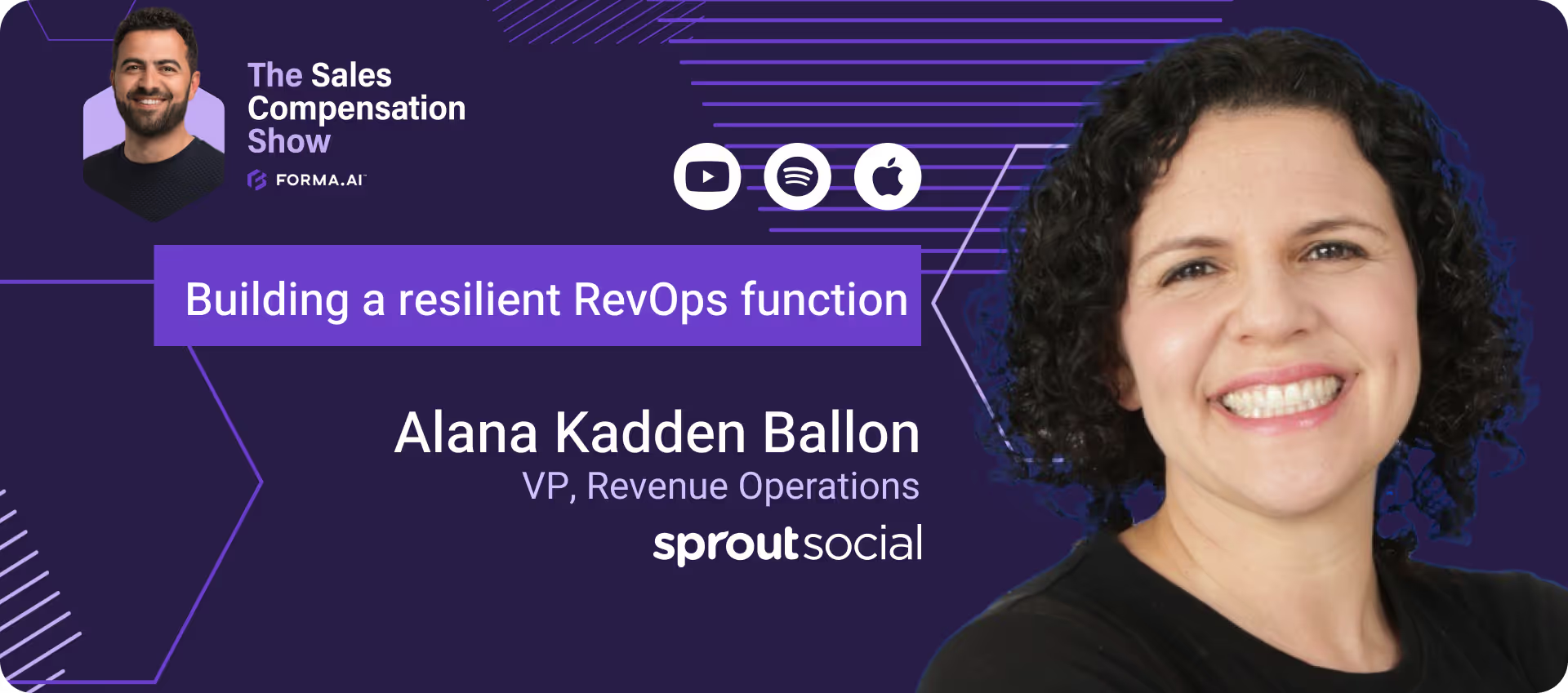
This episode features: Alana Kadden Ballon (Sprout Social)
It's perfect for: RevOps and Sales Ops leaders trying to build systems that survive scale, churn, and rapid GTM change.
Add this episode to your playlist here →
Standardize the core, and get modular for the edges (to scale compensation without chaos)
Here’s a truth most teams don’t say out loud: comp complexity is rarely “math complexity.”
It’s usually policy, crediting, and exception sprawl that create confusion for reps and fragility for admins.
These were the big items Bryan Le spoke to us about on the podcast based on his lessons leading comp at Notion, Salesforce, and Carta.
Brian shared how he thinks about the classic tradeoff of customization vs. scalability, and shared a grounded take on AI (that is—not to “replace comp,” but instead to improve scenario modeling and quota-setting decision quality.)
If your org is adding products, segments, overlays, or channels, the instinct is to create “just one more plan,” Brian’s approach will push you to standardize the core and modularize the variables — to move faster without creating a comp operations tax you’ll pay forever.
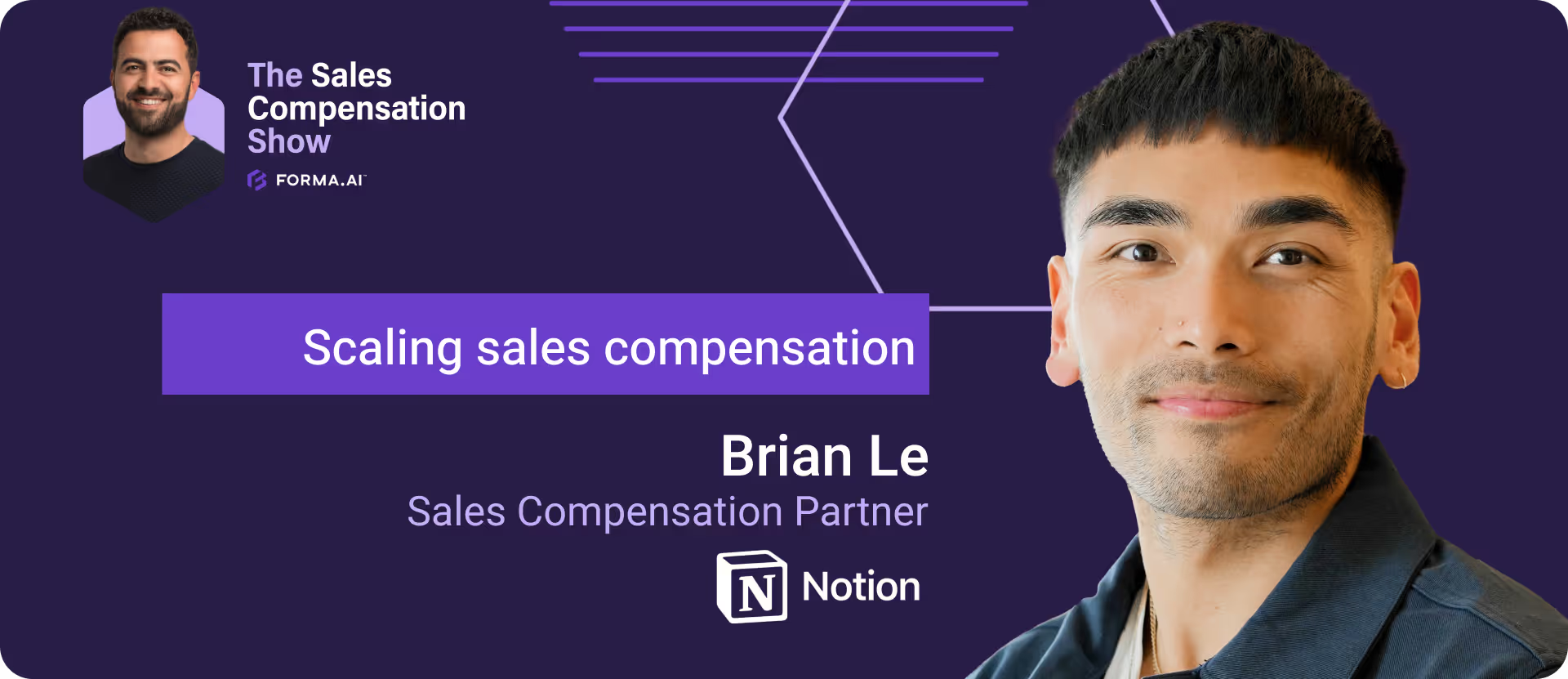
This episode features: Brian Le (Notion)
Listen in if: you're a leader dealing with plan proliferation or constant GTM change amid a huge org.
Craft your playlist and make one resolution you’ll keep for 2026
We heard from so many incredible experts throughout this year, so these are just some of the greatest hits! We hope the above pieces resonate with you, and help you head into Q1 with a confidence boost after listening in!
Changing plan mechanics this upcoming SKO? Watch the rollout session.
Worried about behavior and performance? Start with Ryan Farber's episode and tack on from there!
And if you want more evergreen, operator-led lessons like these all year, be sure to explore the Forma.ai resource library.
.jpg)
.jpg)
.jpg)


