How Replit built a scalable sales compensation function from zero with Forma.ai
Replit is an agentic software creation platform enabling anyone to use natural language to build applications. With millions of users worldwide, Replit is democratizing software development by removing traditional barriers to app creation.
When Quoc Tran joined Replit as VP of Revenue Operations, he had an unusual opportunity.
Upon his arrival, there was no legacy sales compensation operation to untangle or replace.
Replit was building the function from the ground up.
In prior rapidly scaling environments, Quoc had seen what could happen if operations failed to keep pace with the business. It could take three weeks to get territories and quotas to sellers, followed by another month to distribute and sign compensation plans.
By then, a huge portion of the selling period in Q1 was already gone. And the same pace would make quarterly compensation planning entirely impossible.
With Replit’s growth trajectory, this would become more than an efficiency problem. To keep compensation aligned with an evolving GTM motion, the business had to be able to adjust priorities and reset sales incentives more frequently.
Quarterly planning was vital, but only if RevOps could operationalize decisions fast enough for sellers to act on them.
So Quoc built sales compensation for the speed Replit would need as it scaled, choosing to keep strategic decisions in-house while leveraging Forma.ai to handle the administrative work required to put them into action.
With Forma.ai, Replit has successfully built the operating capacity to move to quarterly compensation planning, get plans into sellers’ hands in the first two weeks of the quarter, and manage commissions without hiring a dedicated resource to run the function.
And the company hasn't had to trade control or reliability for that speed. After going live on the platform, Quoc reports no payout disputes, no downtime, and every payout delivered on time.
Why Forma.ai stood out in the evaluation
Starting from zero gave Quoc the opportunity to build sales compensation function to support the growth Replit anticipated.
He knew new roles and geographies and even new measures (like consumption) would add complexity fast as the business evolved. Without the right setup, each would likely become another manual process for RevOps to handle later.
Quoc also had experience using other sales performance management platforms. He knew the category, several alternatives, and knew standard or legacy compensation software wouldn't solve the problem of scale.
Beyond the platform, what changed the evaluation was Forma.ai’s combination of software and hands-on operational expertise:
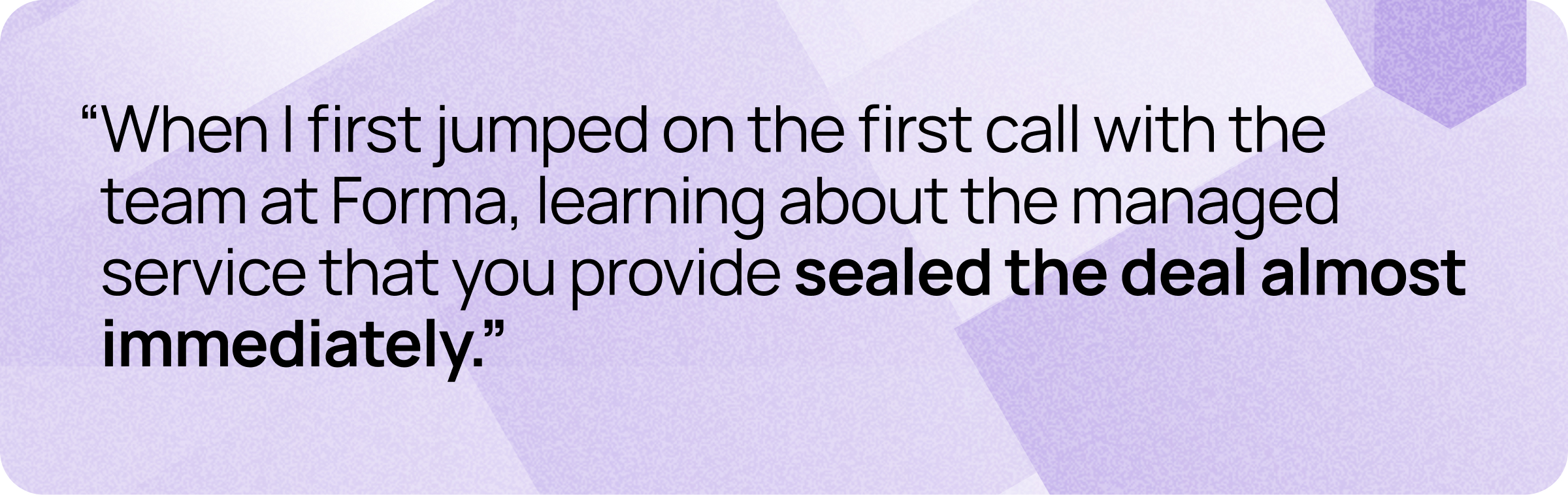
For Quoc, this meant Replit could get both the technology and the expertise required to operate it without hiring internally for administering commissions.
This flexibility became even more critical amid Replit’s CRM migration. Rather than forcing the company to stand up the final automation before the underlying CRM environment was ready, the Forma.ai team helped manually process compensation during the transition.
In Quoc's words, the ownership Forma.ai took during this period was “paramount.”
The quality of support also gave Quoc the confidence the partnership could handle the types of exceptions that inevitably emerge as a GTM model develops.
Forma.ai helped Replit handle complicated compensation scenarios, including partial periods and avoiding duplicate payouts, while also supporting different plans by role and geography, multiple currencies, and changing data systems.
Instead of Replit needing to build this specialized expertise, Quoc could simply bring the business requirements to the Forma.ai team who already had experience with a wide range of compensation scenarios with other global customers.

An extension of the RevOps team, without added headcount
The strong partnership remains central to how Replit operates compensation today.
Quoc’s team meets with Forma.ai weekly wherein sales ops provides the business context (roles, quotas, plan requirements), while Forma.ai takes on the operational lift to turn those decisions into working compensation plans.
For Quoc, the model feels less like administering another vendor and more like a seamless extension of his own team:

The delivery model has allowed Replit’s internal sales operations resources to stay focused on the broader business.
Today, all variable compensation plans are distributed and approved through Forma.ai, where the team has full visibility into what has been sent and signed without relying on a separate Docusign workflow. Further, compensation processes and approvals regularly involve stakeholders across Sales Ops, Finance, the CRO, and acting CFO, all within the same operating environment.
Keeping administration off the Sales Ops team's plate has become even more important as Replit’s planning cadence has accelerated.
Quoc estimates that if his sales operations team also had to administer commissions and manage compensation plan submissions themselves, it'd likely amount to a full-time job during each quarterly planning cycle.
Instead, the Sales Ops team is largely hands-off and gets time to partner with the business on the questions they're truly there to solve.
From annual thinking to quarterly compensation planning
For Replit, moving to quarterly compensation planning meaningfully changes what compensation can do for the business.
In a rapidly evolving GTM environment, assumptions don't stay fixed for twelve months. Replit's land-and-expand motion continues to evolve, payout criteria shift, sources of truth change, and new requirements continue to emerge.
An annual compensation cycle would leave far less opportunity to respond to these changes.
The strategic benefit is the ability to pivot as the business learns. Rather than locking sellers into assumptions made months earlier, each quarter creates an opportunity to reset around what the business now knows; keeping sellers focused and giving Replit greater accuracy in how it plans.
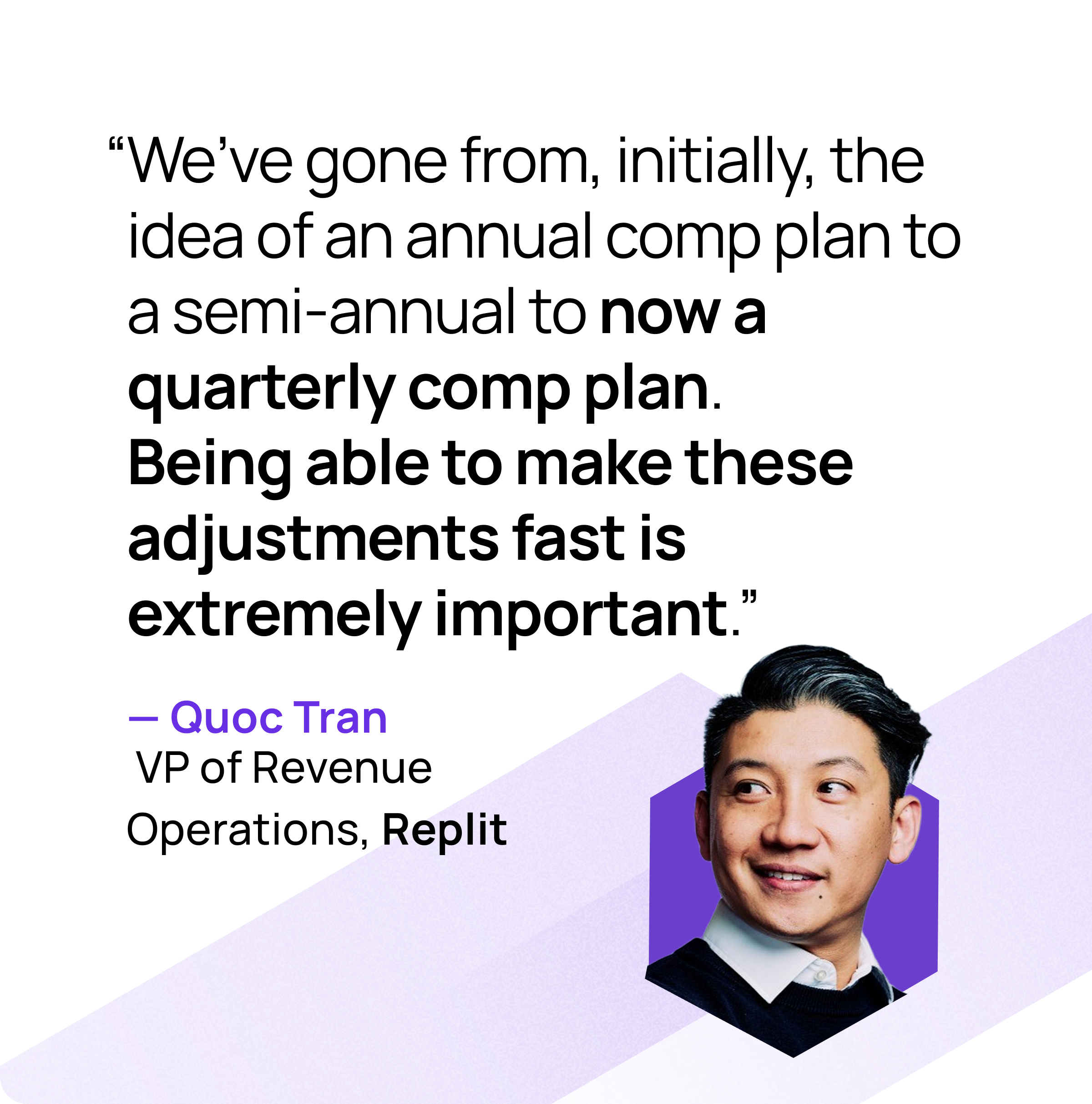
The quarterly cadence would simply be unsustainable if every adjustment created weeks of administration.
Turning “months into weeks”
The operating model Quoc set out to build is already showing results.
Replit is now getting compensation plans to sellers within the first two weeks of the quarter—a pace that makes its move to quarterly planning possible without turning each new cycle into an administrative fire drill.
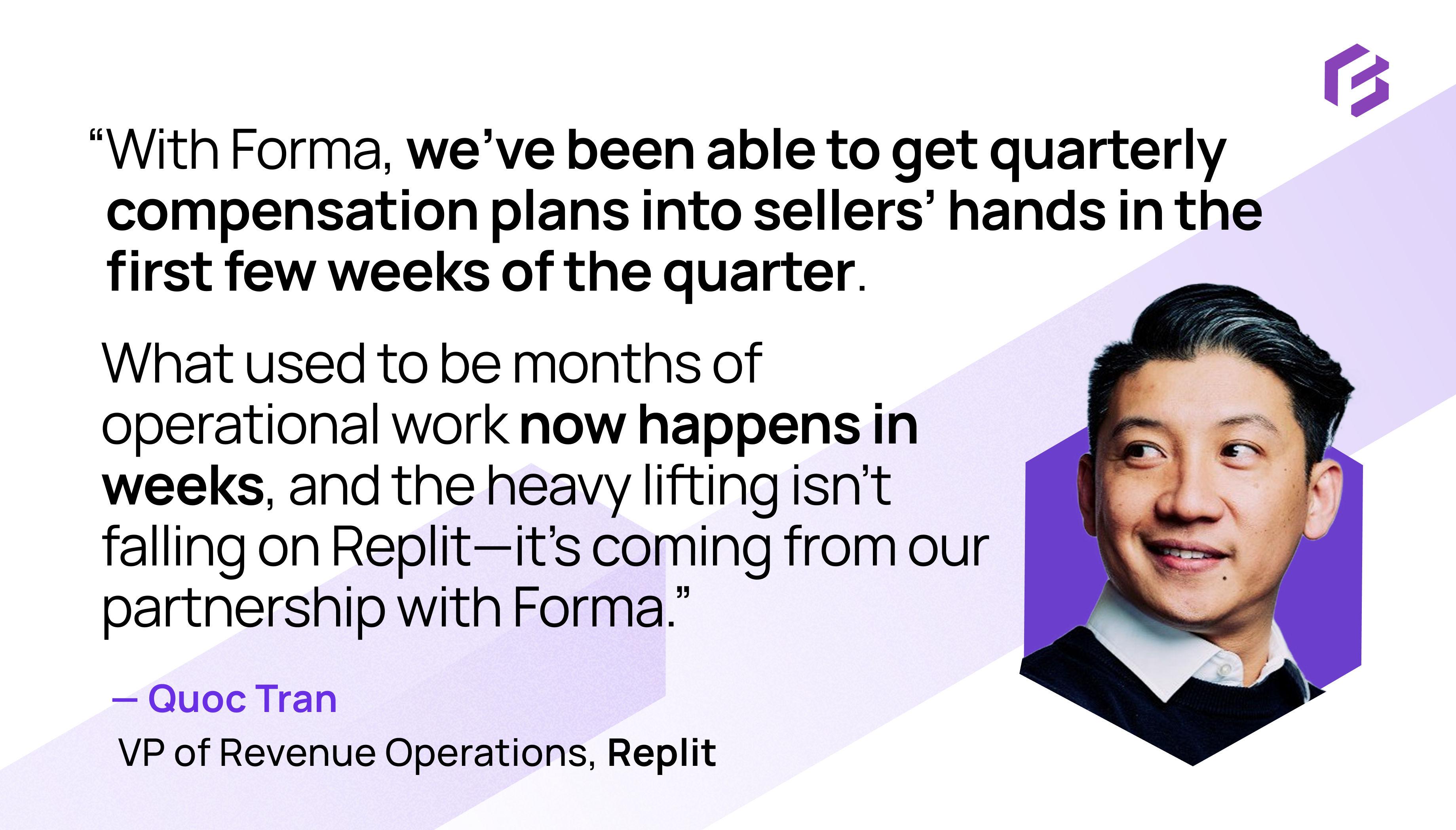
Replit still owns the strategic decisions: roles, quotas, plan design, and how it wants to motivate performance. But once those decisions are made, the operational work required to execute no longer needs to consume the quarter they are meant to influence.
Just as importantly, that speed has not come at the expense of reliability.
When Quoc first proposed the model internally, there were understandable concerns about outsourcing part of such a sensitive process: service levels, quality, visibility, and ultimately whether sellers would be paid correctly and on time.
Since transitioning to sales compensation run through the Forma.ai platform, however, Quoc reports zero payout disputes, zero downtime, and 100% of payouts delivered on time.
He is also hearing something RevOps leaders rarely take for granted: very little at all.
In previous environments, delayed payouts and questions about individual opportunities, commissions, and plan timelines were a regular part of running compensation. At Replit, Quoc is not fielding that same stream of questions.
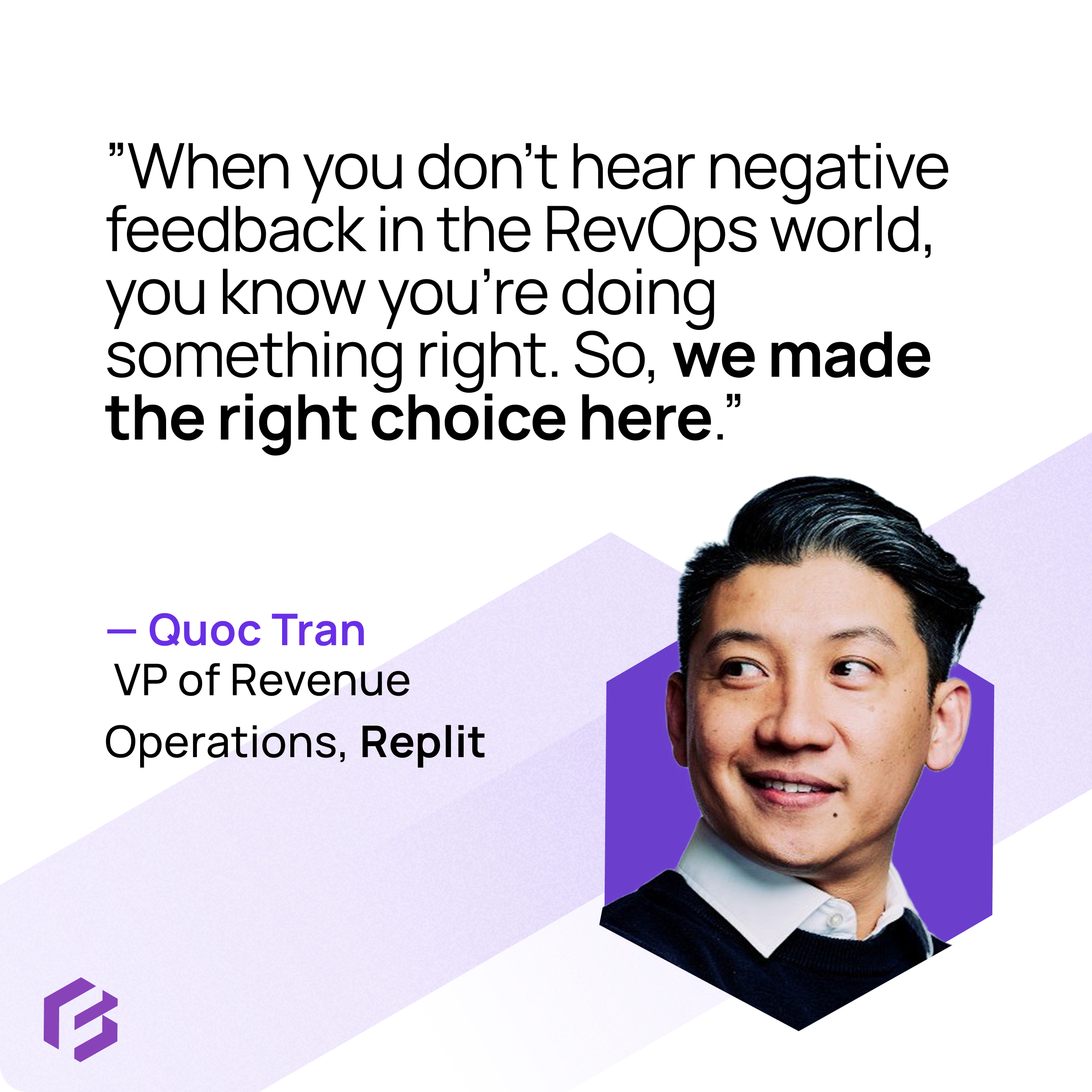
For Quoc, that quiet is perhaps the clearest validation of the decision made at the outset: Replit can move quickly and adapt its compensation strategy without building a dedicated administration function around it.
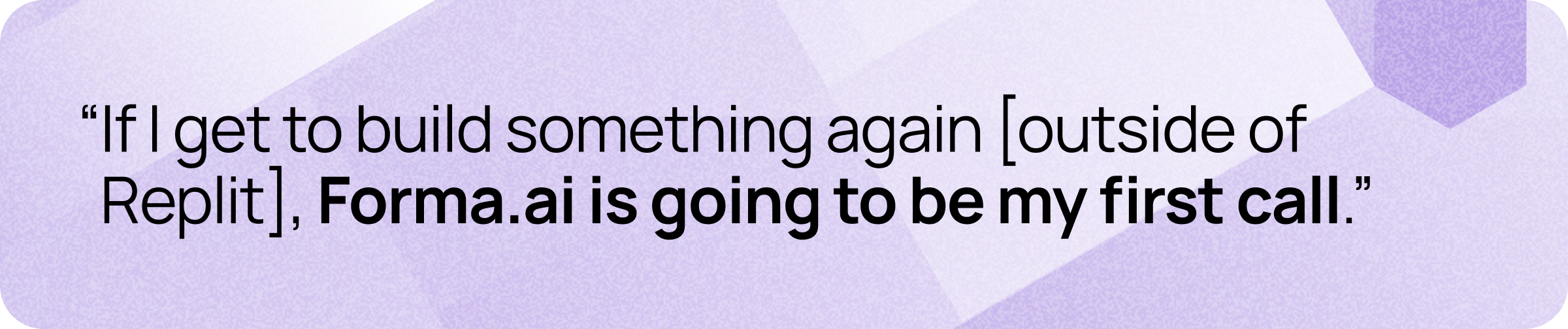
And if he ever finds himself building another revenue operation from the ground up, he already knows where he would start: