
How Yext modernized sales compensation with Forma.ai
Yext, the enterprise agentic marketing platform, supports hundreds of commissionable payees across global territories, making compensation accuracy, visibility, and trust critical to how it motivates sellers and runs go-to-market operations.
At Yext, sales compensation is seen as much more than just a back-office function. It is a strategic lever for shaping seller performance, motivation, trust, and revenue. But over time, Rachel Droller, Director of Commissions Finance, and Monica Levine, Director of Incentive Compensation, found themselves managing a compensation environment that had become too limiting.
As the company’s needs evolved, the team was constrained by a legacy ICM system that was expensive to maintain, difficult to change, and frustrating for both administrators and sellers.
What had once been manageable became a source of drag across the compensation function. The legacy system was heavily reliant on third-party consultants and so complicated that even simple plan changes created ripple effects elsewhere. As Rachel put it:
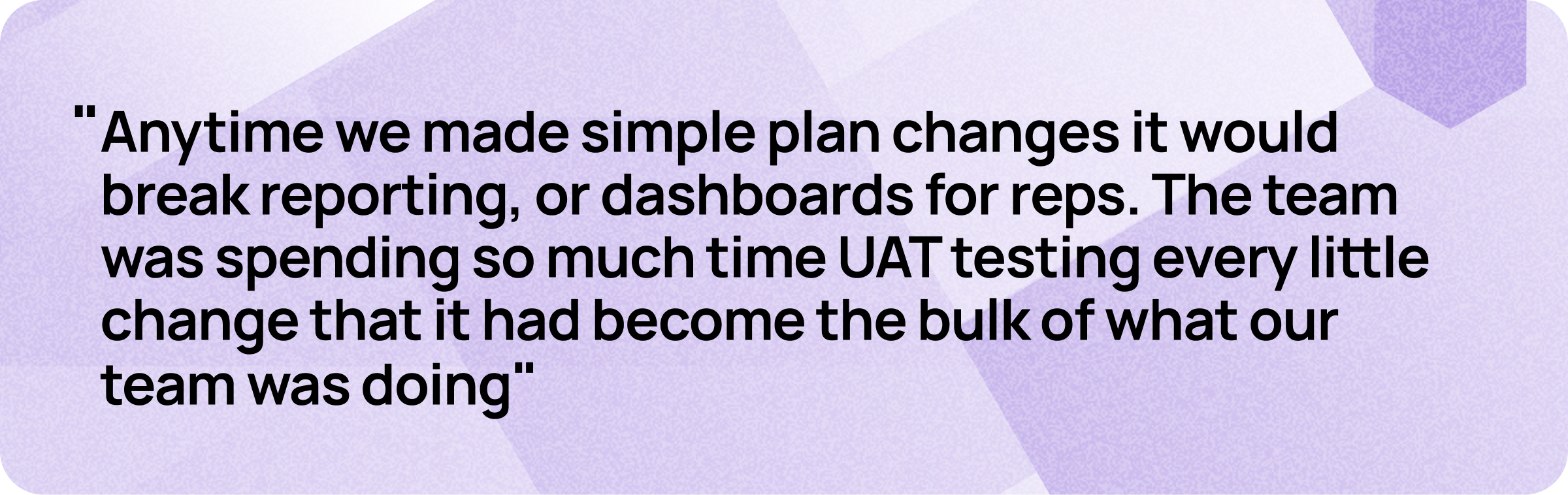
This admin burden began to compound. Internally, Yext had two full-time IT resources effectively tied up managing system administration, amounting to roughly 80 hours a week of support just to keep the environment running.
The system fell short for sellers, too. Reps lacked clear visibility into attainment, transactions, and payout information that should have helped them understand and trust their compensation. But instead of a motivating, transparent experience for the field, compensation was harder to follow.

For Rachel and Monica, the requirements for a new platform became very clear: ease of administration and field friendliness. This combination became the standard they used to evaluate alternative sales compensation software.
Why Yext chose Forma.ai
Yext saw early that Forma.ai’s product direction aligned with where both the compensation team and executive stakeholders believed the category was heading. As Monica shares, “AI was definitely something that was on our and our exec team’s radars” as they considered the future of compensation operations.
But what stood out most was Forma.ai's operating model: a better balance of flexibility, control, and long-term maintainability.
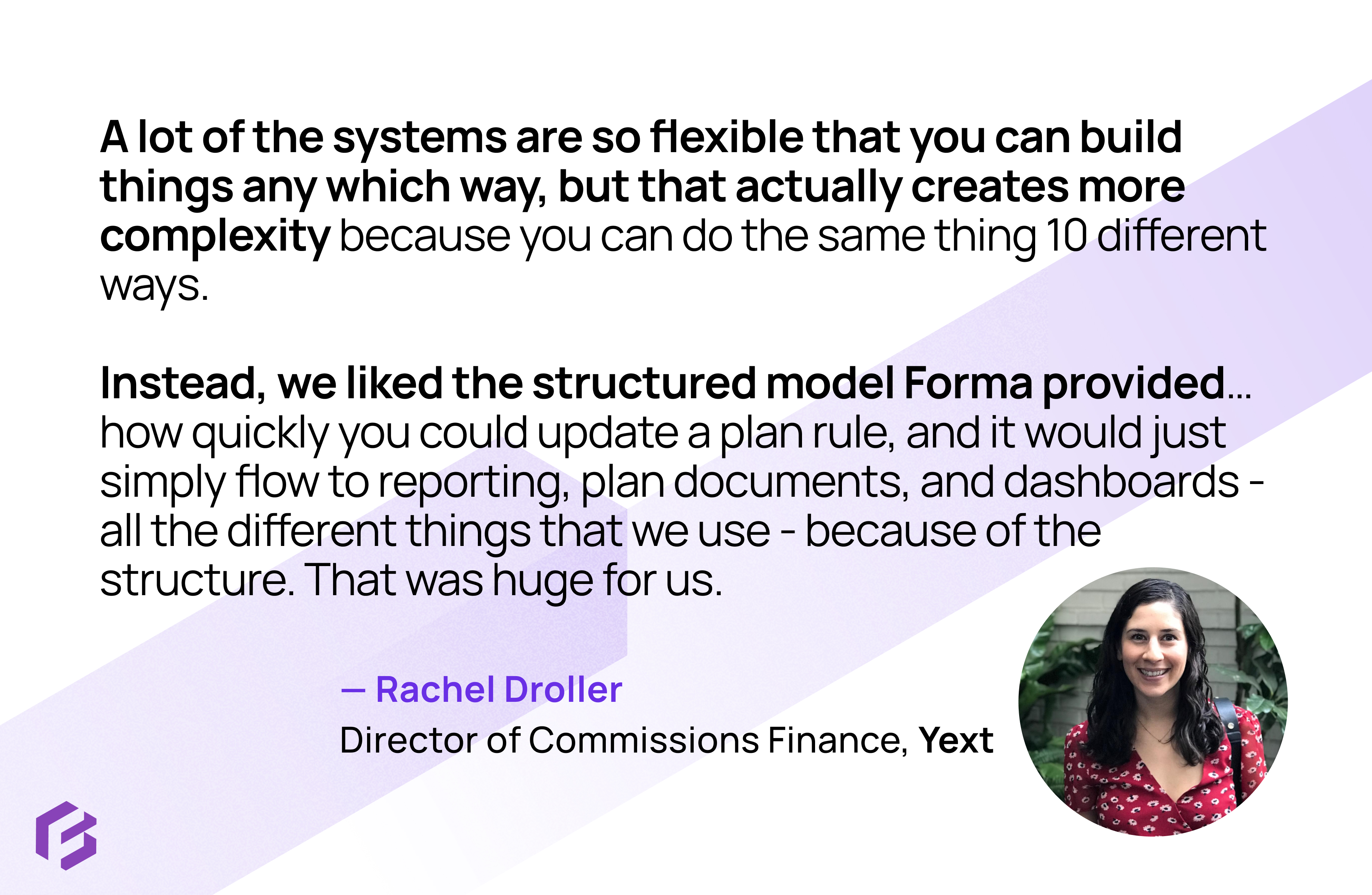
In many of the traditional tools Yext evaluated, endless configurability looked appealing on the surface, but often came with a hidden cost. The same compensation logic could be built multiple different ways, making changes harder to manage over time and increasing the risk of complexity and reliance on third-parties. Yext had already experienced where that path leads. They were not looking for another system that would become an administrative burden. They wanted support for complexity without creating a higher cost of ownership.
Forma.ai offered a different, more balanced solution. Built on one connected data model, Forma's structured, scalable framework gave Yext confidence they could maintain control over plan design and compensation strategy without taking on more technical burden in the process.
Rather than relying on bespoke configuration for every change, Yext saw the value of an end-to-end system built on standardized calculation building blocks and a consistent underlying data foundation.
This structure made it easier to imagine changes cascading cleanly through the entire system, from rules and calculations to reporting and dashboards, without introducing the kind of fragility they had dealt with before:
Yext did not want flexibility that simply shifted more technical responsibility onto the compensation team. They wanted to evolve plans with confidence, while keeping the environment scalable and easier to operate. Monica also noted that some highly self-serve systems made the team wary of ending back in the same cycle of overcomplication, where things were too fragile. Forma.ai felt like a more durable path forward.
Forma.ai's combined software and services offering also reinforced their decision. Rather than relying on internal IT resources or rotating outside consultants to keep the system running, Yext would work with a dedicated team that knew the platform deeply and could help keep the environment clean, scalable, and aligned to best practices over time.
Overall, Forma.ai gave Yext more than a modern alternative to a legacy system. It offered a cleaner way to run sales compensation: one that paired flexibility with guardrails, reduced dependence on technical support, and gave the team more room to focus on strategy instead of administration.
Early results: greater seller clarity and stronger operational leverage
Following a six-month implementation, Yext began realizing meaningful early wins quickly from a more modern compensation operating model. The most important has been seller visibility as a better way to align seller behavior to plan design.
With clearer dashboards and more transparent transaction-level detail, Yext sellers can now more easily see what they are getting paid on, where they stand against attainment, and exactly what they need to do next to improve outcomes. This visibility has shifted the conversation with the field from payout confusion to performance guidance.

This visibility is making compensation more motivating and actionable for the field. Instead of static statements after month-end close, sellers now have more organized and intuitive views into performance, earnings, payments, and detailed transactions throughout the month. Monica noted that the real-time updates create more motivation than static statements ever could.
Yext is also gaining more flexibility in how the company structures compensation plans. With a more maintainable configuration model in place, the team has been able to introduce several additional plan variations this year. This shift has given the team more room to refine plan design as needs evolve, without recreating the technical burden they faced before.
A more scalable way to run compensation
Operationally, Yext is also seeing a cleaner, more sustainable model take hold. Month-end close has improved. The team is spending 400 fewer hours a year reconciling data and validating payroll outputs and can now dedicate this time to higher-value work.
Yext’s plan rollover process is becoming more condensed, and the team can make changes with greater confidence and speed than before. Compensation operations now require less manual intervention and can support more strategic analysis. This gives the team more room to elevate the function.
The company is also benefiting from more automated data feeds and dashboard refreshes than it had previously, including more frequent updates that support both the field and the operations team.
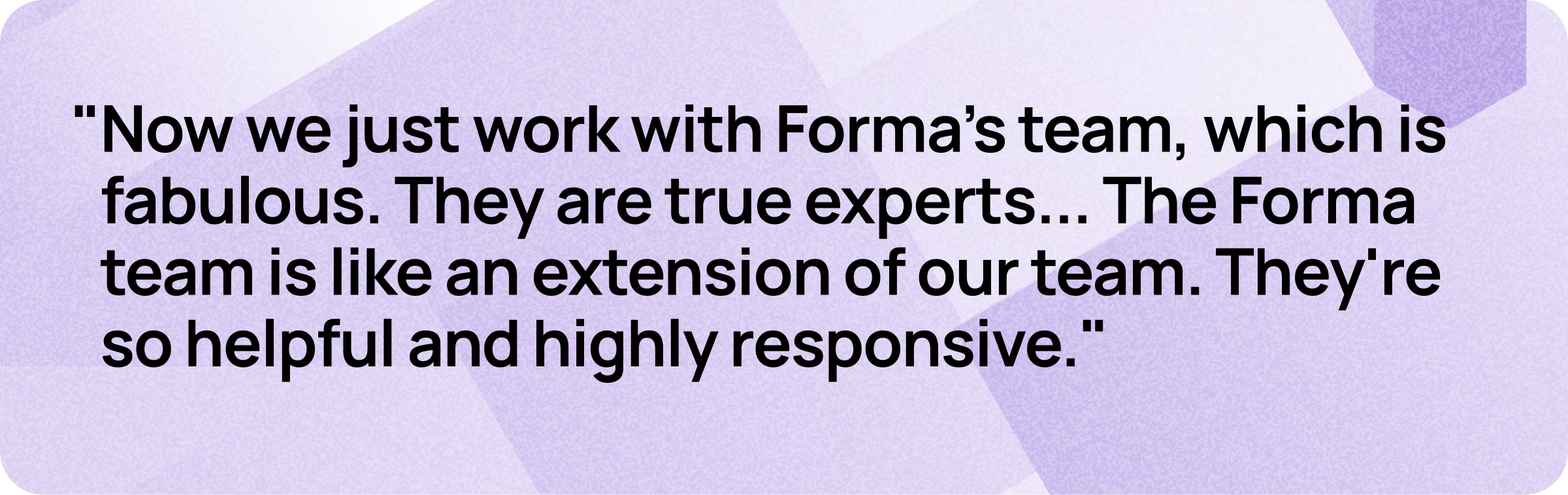
Just as importantly, rather than requiring dedicated internal IT support and too much administrative effort, Yext now works directly with Forma.ai’s customer operations team who know the platform deeply and can support continuously. As Rachel shares:
Better visibility into data, and more confidence in payouts
While the Yext team was not formally tracking error rates in the prior environment, Forma.ai is surfacing data issues earlier and improving trust in compensation outcomes. Yext can now identify upstream data issues earlier and more clearly than before thanks to better visibility and automation:

For Yext, compensation is becoming not only easier to manage, but easier to trust.
Unlocking more time for strategic work
By reducing manual effort and improving access to structured, more flexible data, Forma.ai is helping shift Yext’s compensation team out of administration and into more strategic work. With access to more customizable data going forward, the team is now better positioned to support executive reporting, expand leadership visibility, and model future plan changes with greater confidence; making more data-informed decisions about plan design over time.


